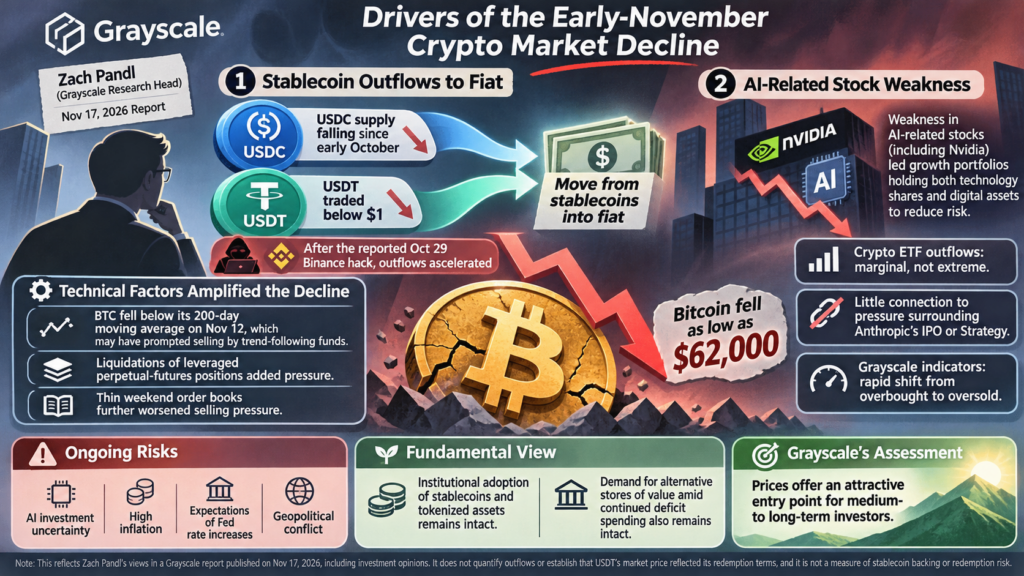
In a report published on November 17, 2026, Grayscale research head Zach Pandl attributed the crypto market’s decline in the first two weeks of November partly to investors moving from stablecoins into fiat. He said USDC supply had been falling since early October, USDT subsequently traded below $1, and outflows accelerated after a reported October 29 hack of Binance. The report did not quantify those outflows or establish that USDT’s market price reflected its redemption terms.
Pandl identified a second pressure: weakness in AI-related stocks, including Nvidia, that he said prompted growth portfolios holding both technology shares and digital assets to reduce risk. Bitcoin fell as low as $62,000 during the period, according to his account.
He said technical factors amplified the decline. Bitcoin’s move below its 200-day moving average on November 12 may have prompted selling by trend-following funds; liquidations of leveraged perpetual-futures positions and thin weekend order books added pressure. Pandl described crypto ETF outflows as marginal rather than extreme, and Grayscale saw little connection between the decline and pressure surrounding Anthropic’s IPO or Strategy.
Pandl said Grayscale’s proprietary indicators had shifted rapidly from overbought to oversold. He acknowledged risks from uncertainty around AI investment, high inflation, expectations of Federal Reserve rate increases and geopolitical conflict. In his view, institutional adoption of stablecoins and tokenized assets, along with demand for alternative stores of value amid continued deficit spending, remained intact. His assessment that prices offered an attractive entry point for medium- to long-term investors was an investment opinion, not a measure of stablecoin backing or redemption risk.