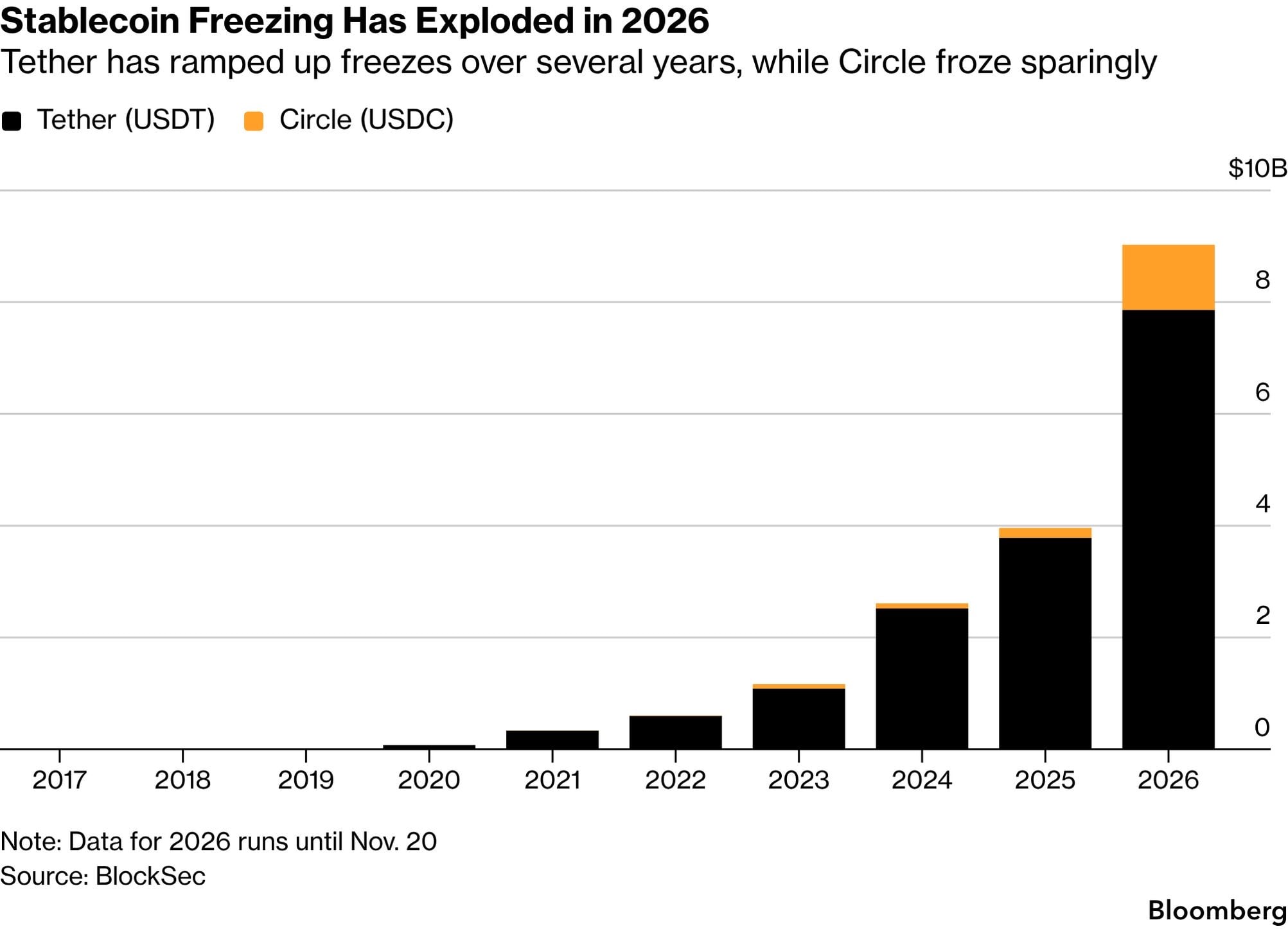
During the $6.3 billion theft from Binance in October 2026, Tether froze more than $1.5 billion in USDT within 30 minutes. Circle froze $1.1 billion in USDC. The issuers acted after requests from Binance and the US government. Binance later reopened withdrawals in stages and used its own funds to replace customers’ stolen tokens.
An issuer can freeze its stablecoin at a blockchain address, preventing transfers without deciding who is entitled to the balance. That distinction mattered to Singapore exchange Bittok Technology Pte. Ltd. At the time of the original report’s publication on November 25, 2026, at 17:14:27 UTC+8, Bittok had yet to recover USDT that Tether froze after a $50 million theft in June 2020.
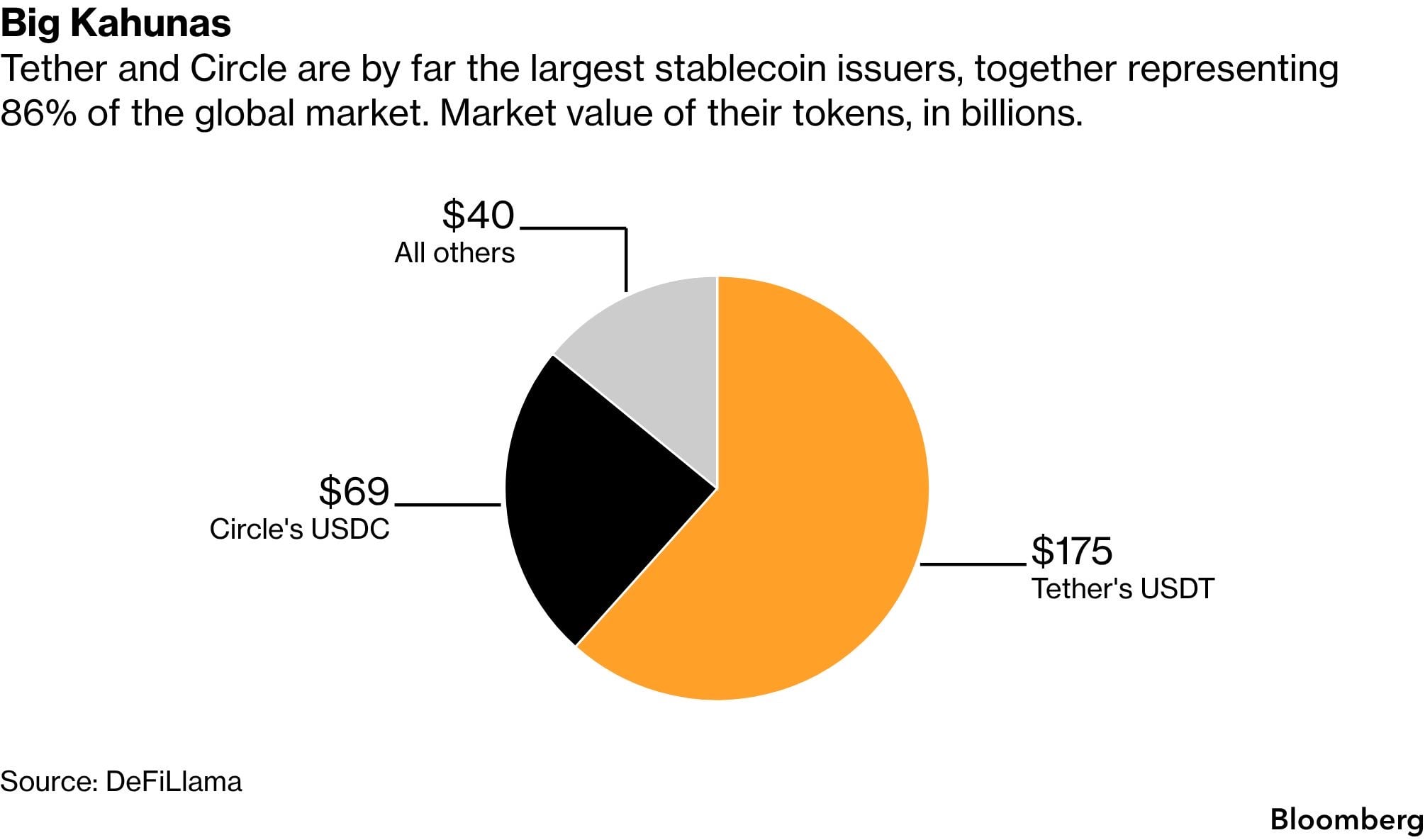
The two issuers’ decisions affect most of the stablecoin market. The reported value of USDT in circulation was $175 billion, against $69 billion for USDC. Together they accounted for 86% of the market, with all other stablecoins worth a combined $40 billion.
What it takes to recover frozen USDT
Emails reviewed by Bloomberg showed that lawyers representing Tether told Bittok’s acquirer it would have to pay a 20% reissuance fee to recover the tokens. People involved in negotiations in several other cases said victims received replacement USDT in installments and faced the same fee.
Tether CEO Paolo Ardoino said the company reissues tokens in stages in civil cases because multiple parties may claim the same funds. He said there were no clear rules or dedicated law governing the process. A Tether spokesperson said the company had reissued $1.2 billion in USDT and that fees covered processing and legal costs. Separately, Tether said in its Binance incident announcement that it had frozen more than $7 billion in assets to date. That was a figure for freezes, not for money returned to victims.
Sathya Narayanan Subramanian, a lawyer at India’s VSM Legal Associates who represented USDT holders from Russia, Germany and Spain, said Tether acted promptly on freeze orders but none of his clients had received replacement tokens. For Berlin resident Valentyn Golyshenko, the difficulty came earlier: he said that after he lost $75,000 to fraud, his request for a freeze was denied and the wallet was subsequently emptied.
Why Circle’s response to Drift is in dispute
After the April 1, 2026, attack on Drift Protocol, much of the stolen money was converted into USDC. Circle did not immediately freeze it; executives said a court order was needed. Ollie Smith, a senior investigator at crypto tracing firm zeroShadow and a former police officer, said the legal process was too demanding to complete in 35 minutes.
In May, Circle revised its published policy to say a lawful directive from law enforcement could support a freeze without a court order. A spokesperson said the change documented existing practice. CEO Jeremy Allaire said increasingly sophisticated attacks required issuers and law enforcement to coordinate faster. By the time of the October theft, Binance had invested $100 million in Circle, and the companies had renewed their partnership for five years. The US government and industry analysts attributed the Binance attack to North Korea.
Joshua McCollum, lead plaintiff in a class action over the Drift theft, lost about $23,500 in the attack, according to the complaint. The plaintiffs alleged that people had publicly alerted Circle while funds were moving. McCollum’s law firm, Gibbs Mura, argued that Circle’s response to the Binance theft demonstrated it had been capable of intervening sooner at Drift. Circle asked the court to dismiss the case and declined to comment on pending litigation.
Enforcement brings competing demands
Tether said it worked with more than 170 law enforcement agencies in 73 countries and was establishing emergency contacts with major exchanges. The US Justice Department has recognized its assistance in money-laundering cases and in intercepting funds bound for sanctioned jurisdictions, including Iran. Institutions and payments companies, meanwhile, have sued Tether over freezes.
A September 2026 report from the US Senate Permanent Subcommittee on Investigations held Tether responsible for Iran’s use of USDT to evade sanctions and finance armed groups including Hezbollah. Senator Richard Blumenthal, the report’s author, said Tether had done too little to stop criminal use of its tokens. Ardoino rejected the criticism as a political attack without substantive basis.
Ari Redbord, a blockchain security policy executive, said the decisive step for victims was reissuance. A fast freeze can stop tokens from moving; it does not settle a contested claim or put replacement tokens in a victim’s wallet.