
A stablecoin payment can end with a merchant receiving Hong Kong dollars in a bank account. What matters for licensing is not the label “crypto payment,” but who handles each step: receiving funds, converting assets, settling the payment and controlling any wallet keys.
In an analysis published on 16 November 2026, Shao Jiadian of Mankun Blockchain Legal Services set out how those functions may bring different Hong Kong licensing regimes into view. The analysis distinguishes using an existing stablecoin for payment from issuing one.
Fiat settlement and merchant balances
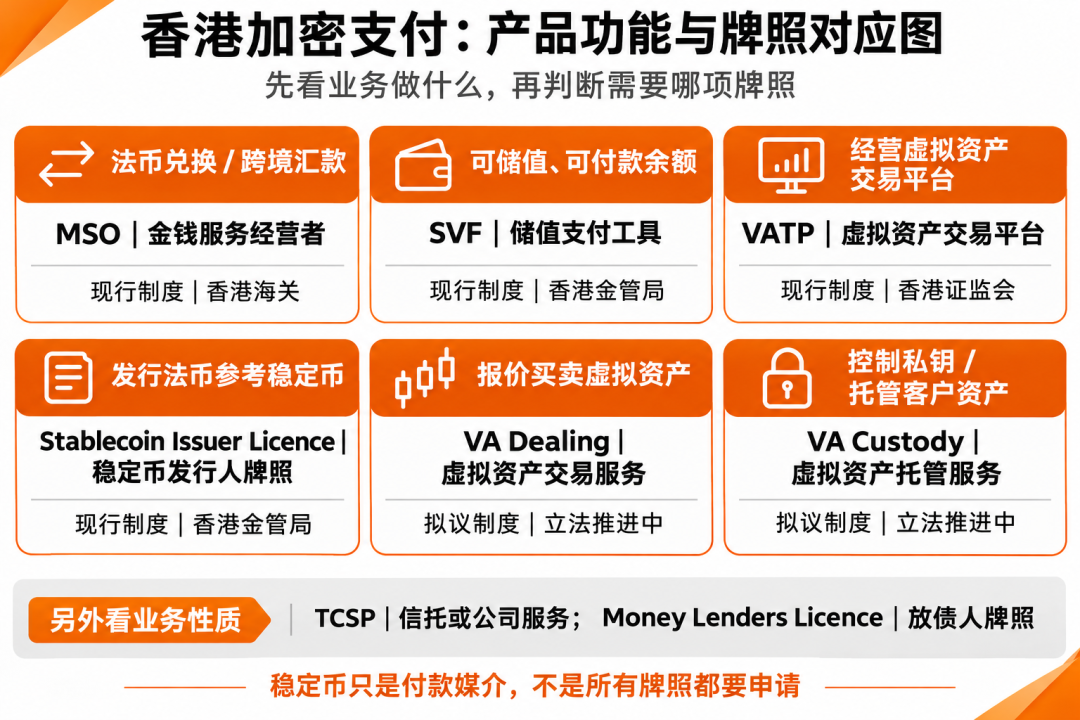
A Money Service Operator (MSO) licence concerns fiat-currency exchange and remittance. If a payment company accepts a customer’s instructions and arranges cross-border Hong Kong dollar receipts or payments, its role needs assessing even if a bank executes the final transfer. An MSO licence does not, by itself, authorise the company to buy and sell stablecoins: converting a stablecoin into Hong Kong dollars is not the same as exchanging one fiat currency for another.
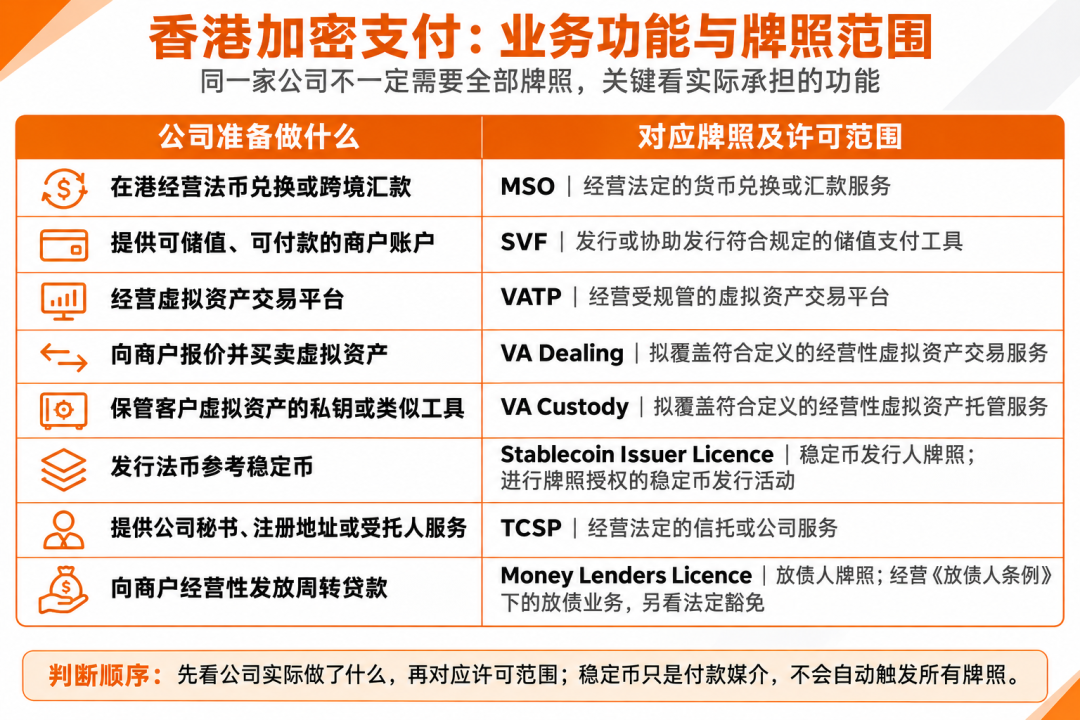
A Stored Value Facility (SVF) licence raises a different question. Immediate settlement to a merchant’s external bank account differs from letting the merchant retain a platform balance and use it to pay third parties. The analysis identifies that combination—retained value and subsequent payment functionality—as the key SVF concern. It also cites a minimum paid-up capital requirement of HK$25 million for SVF applicants.
Trading, issuance and control of assets
A payment service does not become a virtual asset trading platform (VATP) merely because a customer pays in stablecoins. The analysis contrasts payment conversion using an external quote with operating a marketplace where customers’ trades are matched. A company that builds an internal matching mechanism or offers its own trading quotes would need to examine its trading activity separately.
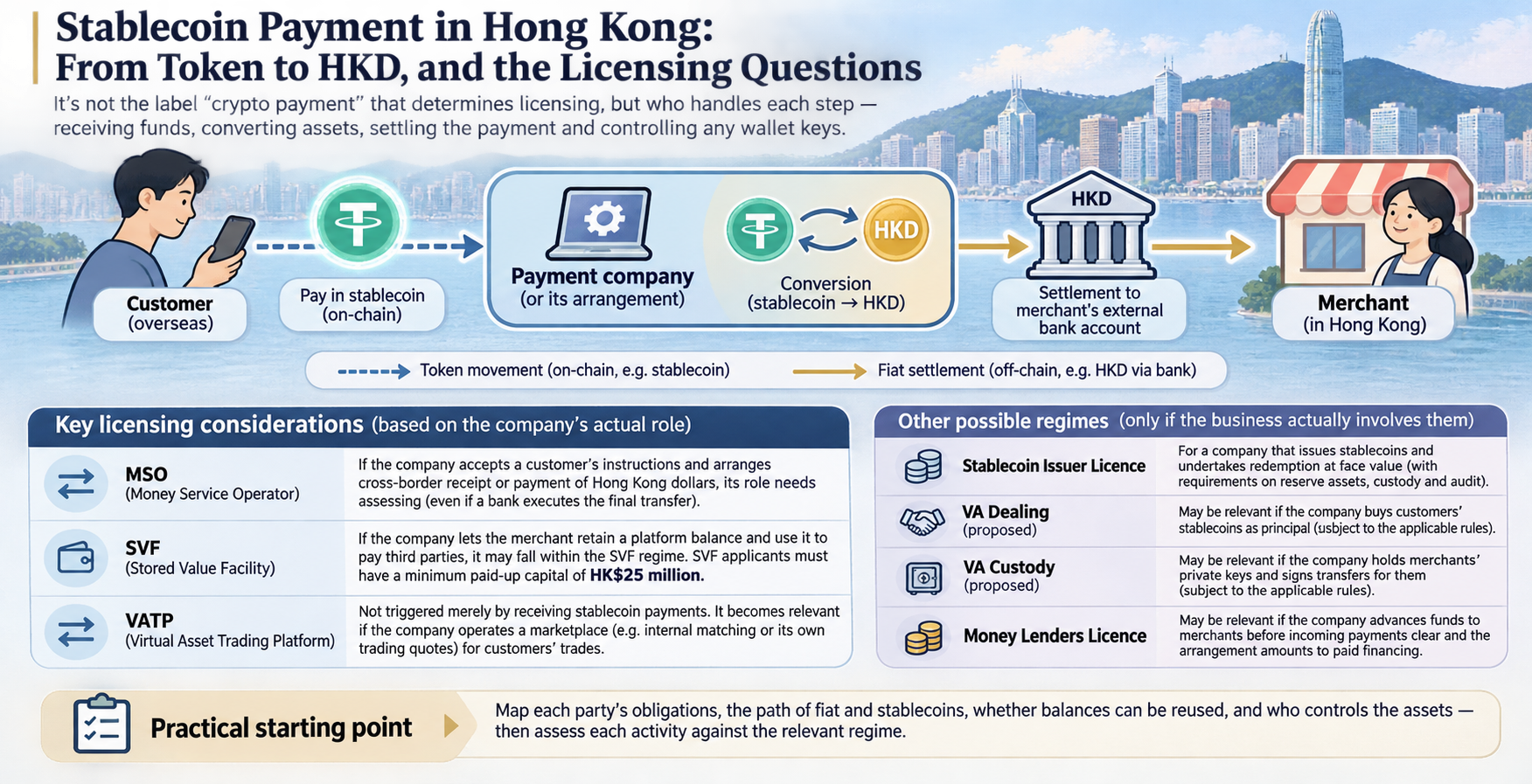
Hong Kong’s Legislative Council passed the Stablecoins Ordinance in May 2025, establishing a distinct licensing framework for fiat-referenced stablecoin issuers. That issuer question concerns a firm issuing stablecoins and undertaking redemption at face value—not a payment company simply using an existing token to collect or settle payments. The analysis describes reserve assets, custody and audit requirements as part of the issuer framework; it does not establish that any particular token meets them.
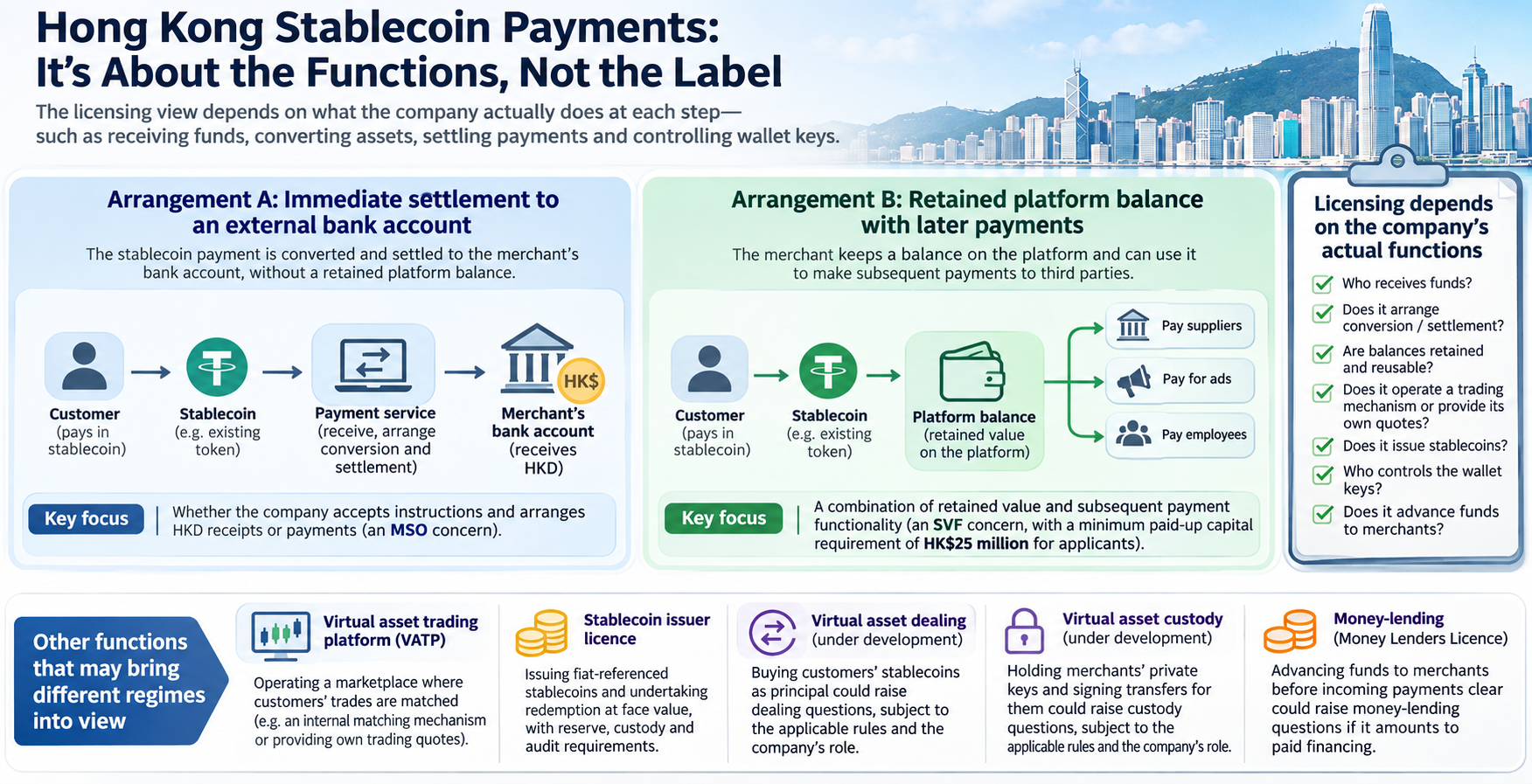
The analysis also flags two proposed licensing regimes. As it stood at the original reporting date, separate virtual asset dealing and virtual asset custody regimes were under development, not licences that every payment company already had to hold. Buying customers’ stablecoins as principal could raise dealing questions; holding merchants’ private keys and signing transfers for them could raise custody questions. Their treatment depends on the applicable rules and the company’s actual role.
Finally, advancing funds to merchants before incoming payments clear could raise money-lending questions if the arrangement amounts to paid financing. The practical starting point is therefore to map each party’s obligations, the path of fiat and stablecoins, whether balances can be reused, and who controls the assets—then assess each activity against the relevant regime.