The World Bank Group, Citi and Circle are exploring whether USDC and blockchain networks could supplement existing cross-border development-aid transfers, according to a TechFlow report published on November 18, 2026. The arrangement was described as an exploratory pilot, not an operational replacement for bank payments.
Under the reported plan, Circle would provide USDC issuance and settlement infrastructure, while Citi would connect the proposed blockchain settlement route with conventional bank-payment systems. Initial testing would be limited to borrowing countries where digital-asset use is legally permitted. The World Bank Group would later assess whether to involve more international commercial banks.
The aim is to reduce intermediary-bank fees, settlement delays and gaps in payment visibility. TechFlow said conventional transfers for development projects can pass through three or four intermediary banks and typically take three to five business days. Near-real-time blockchain settlement is a proposed benefit, not an outcome the report establishes.
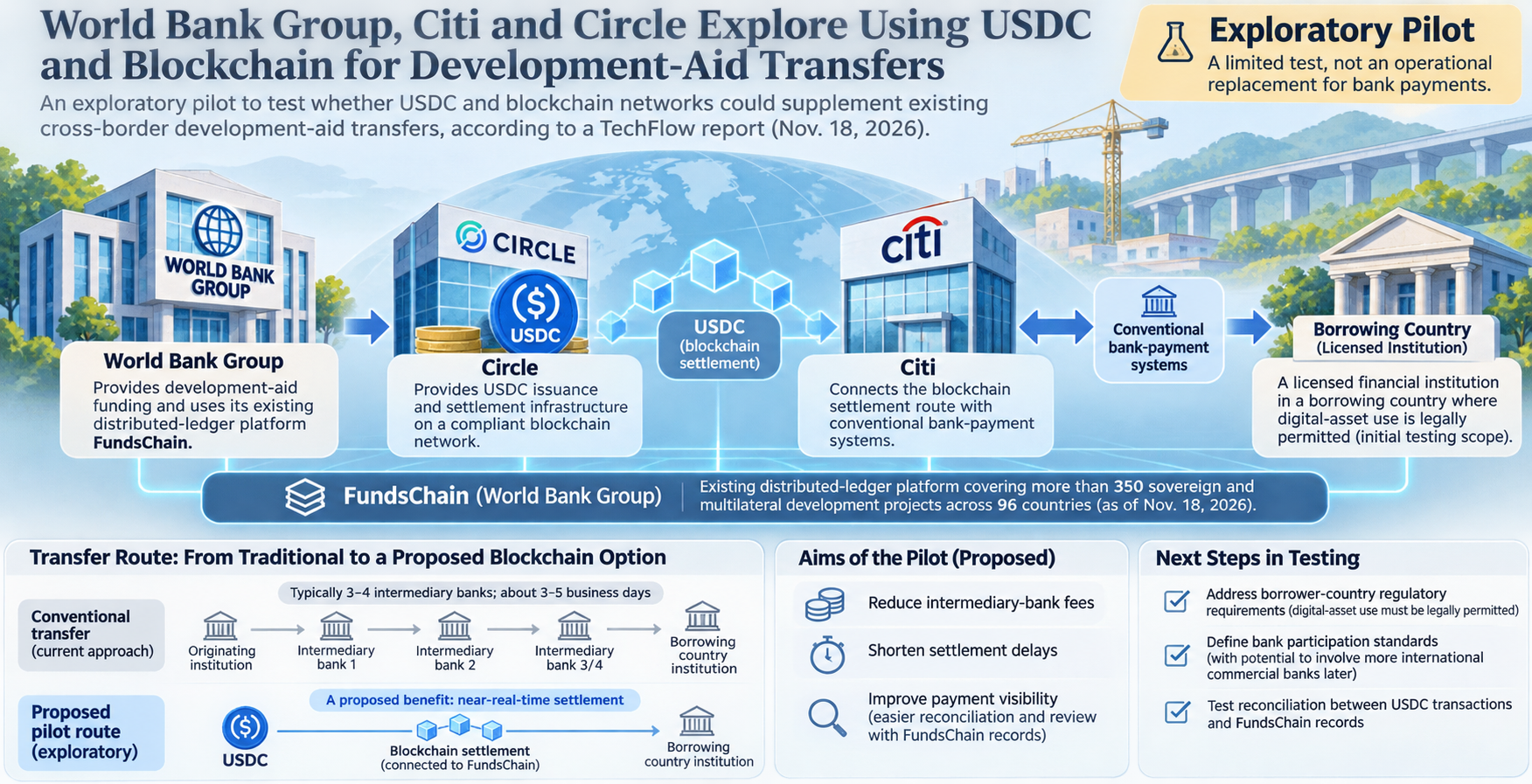
The report says the work would build on FundsChain, the World Bank Group’s existing distributed-ledger platform. It reported that, as of November 18, FundsChain covered more than 350 sovereign and multilateral development projects across 96 countries. Connecting USDC payments to that ledger is intended to make disbursements and spending easier to reconcile and review; the report does not establish that the proposed integration is already operating.
TechFlow describes USDC as backed by dollar cash and liquid reserves including short-term US Treasuries. It provides no reserve audit or independent verification of that claim. The report says further joint testing would address borrower-country regulatory requirements, bank participation standards and reconciliation between USDC transactions and FundsChain records.