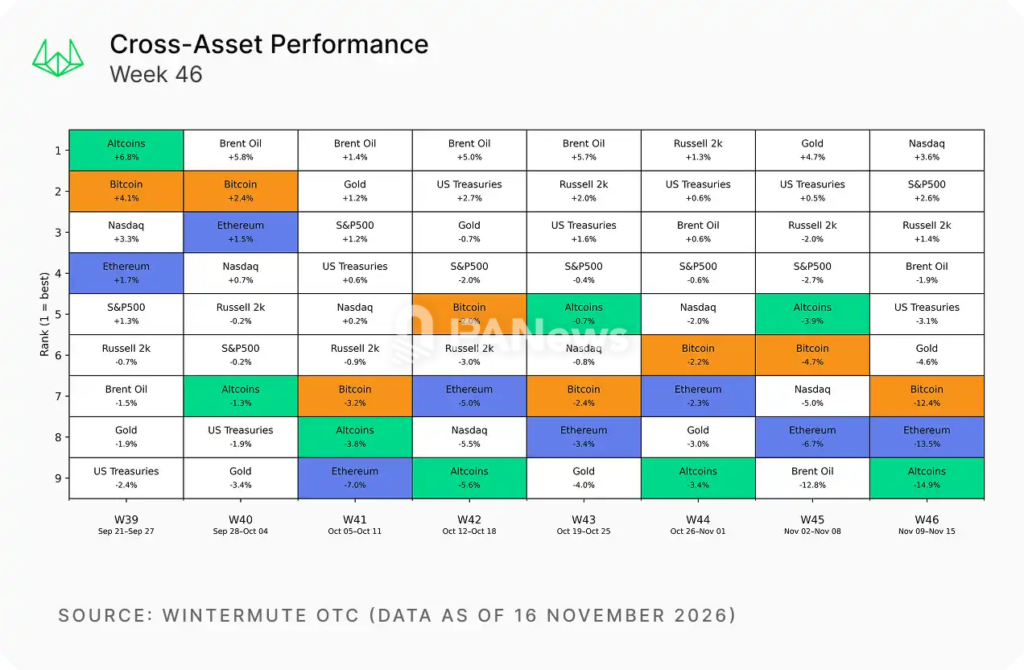
Wintermute’s market assessment, published on November 18, 2026, argued that Bitcoin’s rebound from its July low had failed and that shrinking sources of capital could leave prices under further pressure. Its outlook was a forecast, not a confirmed price trajectory.
Funding flows weaken
Wintermute reported that US spot Bitcoin ETFs had recorded approximately $1.9 billion in net outflows so far in 2026, after net inflows of roughly $21 billion in 2025 and $35 billion in 2024. It also estimated that stablecoin supply had fallen by about $14 billion to $16 billion over the preceding 30 days. Wintermute interpreted that decline as a sign that fresh dollar funding was not entering the crypto market at the pace needed to support a recovery.
The firm said buying by digital-asset treasury companies was also weakening. These were separate funding channels in its analysis: a change in stablecoin supply does not, by itself, establish where capital went or whether holders redeemed particular tokens.
Why Wintermute remains defensive
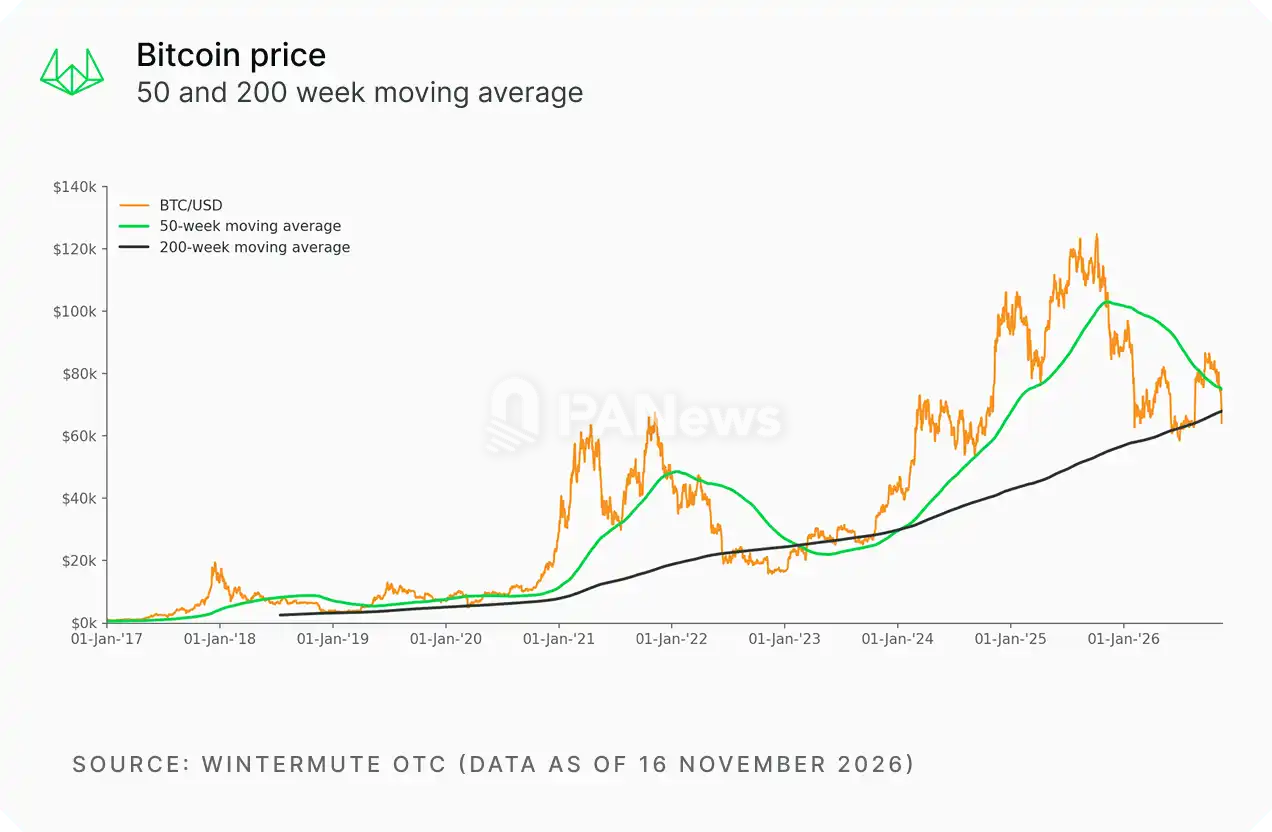
Wintermute linked Bitcoin’s decline to rising interest-rate expectations. It reported a US 10-year Treasury yield of 5.15% and said markets were pricing an approximately 92% probability of a December Federal Reserve rate increase. According to its assessment, Bitcoin had fallen 12.7% over the previous week to $65,400 and had closed below its roughly $68,000 200-week moving average.
The firm did not regard approximately $1.7 billion in crypto liquidations over a recent 24-hour period as evidence of a market bottom. It said about 80% of those liquidations involved long positions and interpreted the subsequent rebound as more likely driven by short covering than by new investment.
Wintermute identified $62,000 as an initial level to watch and $60,000 as an area with concentrated Deribit put-option positions. It said continued pressure could take Bitcoin toward the $50,000 range, while cautioning that it could not identify an absolute bottom. To reconsider its short-term defensive view, the firm said it wanted to see Bitcoin close back above roughly $68,000 alongside renewed net inflows into spot Bitcoin ETFs, or a shift in interest-rate expectations following inflation or Federal Reserve news.