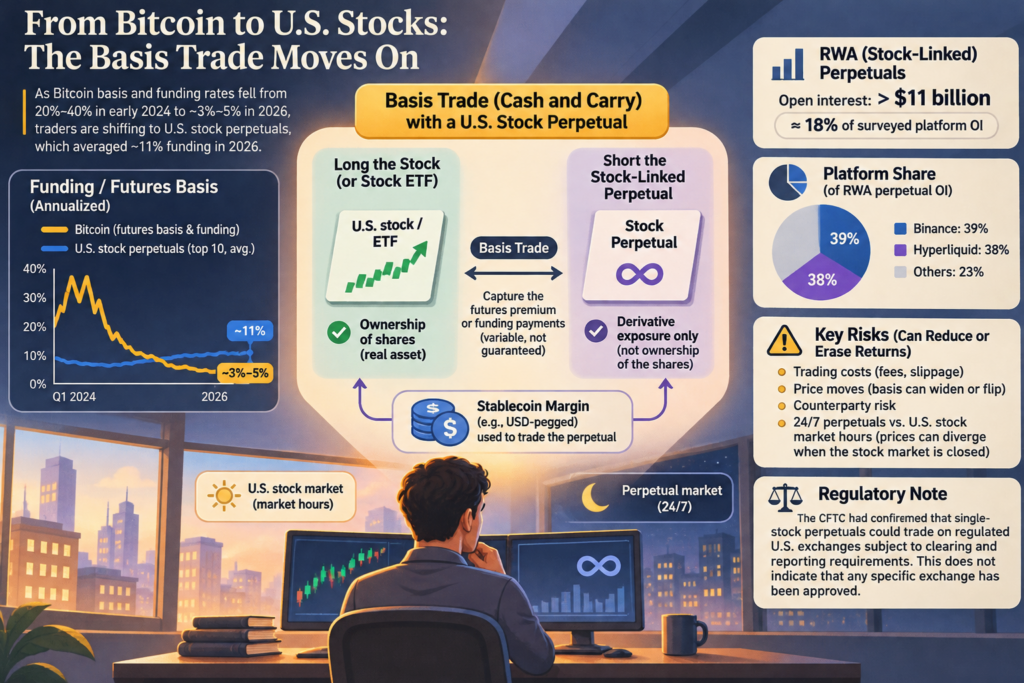
A report dated November 18, 2026, describes a shift in basis-trading opportunities from Bitcoin futures toward perpetual contracts linked to U.S. stocks. In a basis trade, a trader buys the underlying asset and shorts a related derivative. The return depends on the futures premium or funding payments—and can be reduced or erased by trading costs, price moves and counterparty risk.
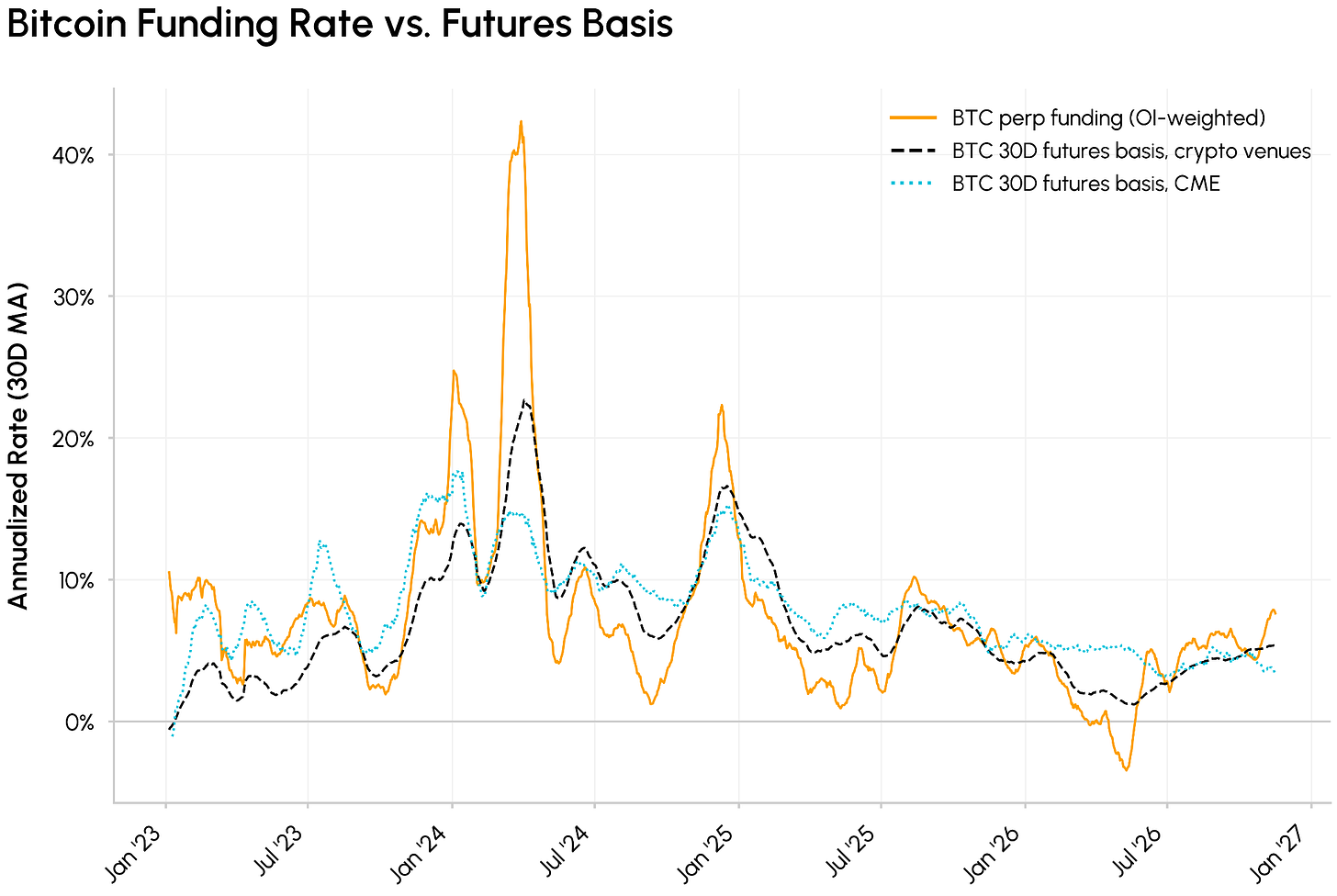
The report says Bitcoin’s annualized 30-day futures basis and perpetual funding rates, which reached roughly 20%–40% in the first quarter of 2024, had fallen to around 3%–5% in 2026. It contrasts those figures with an average annualized funding rate of about 11% for the ten largest stock perpetuals by open interest in 2026, versus about 3% for the ten largest crypto-asset perpetuals. Funding rates are variable, not a guaranteed return.
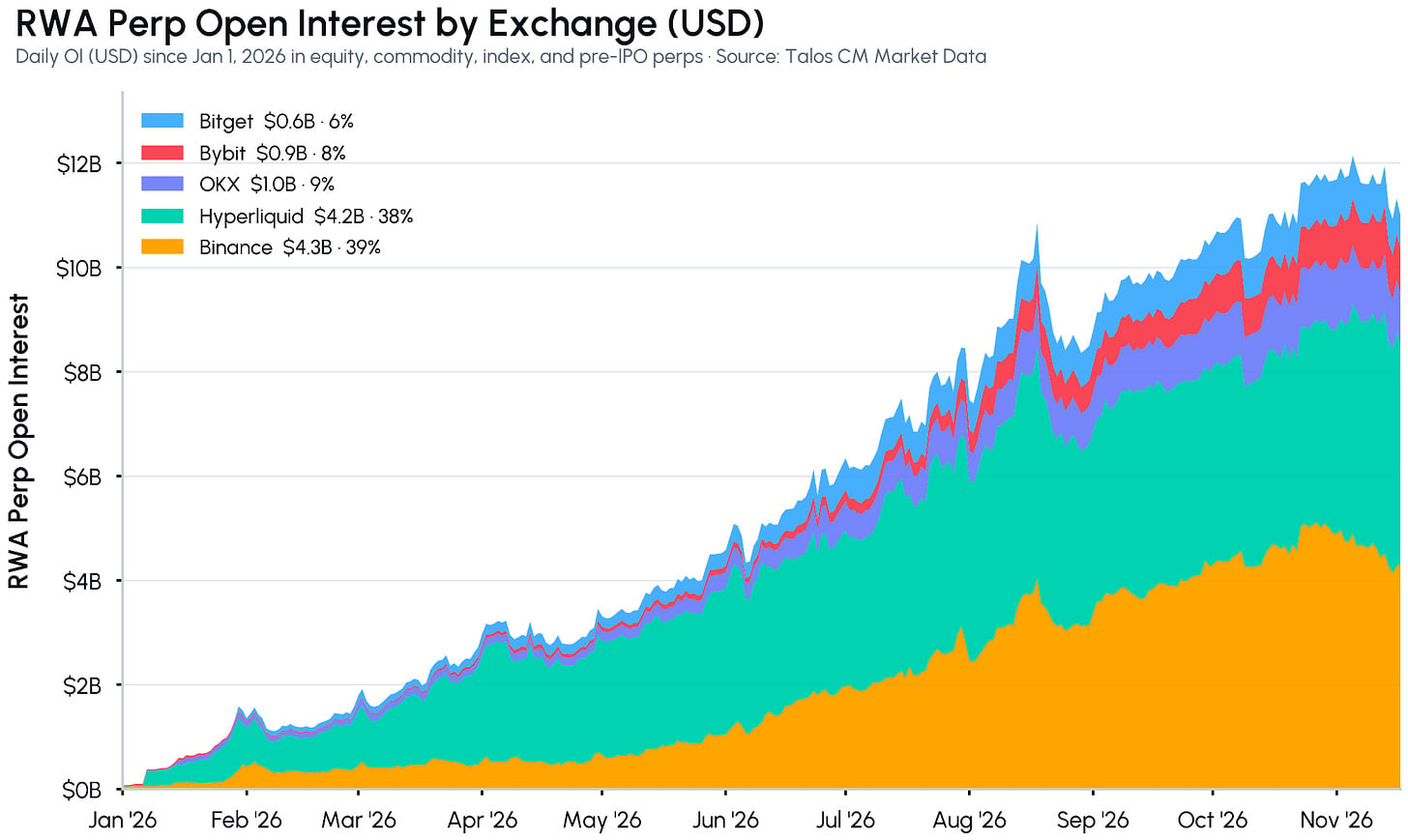
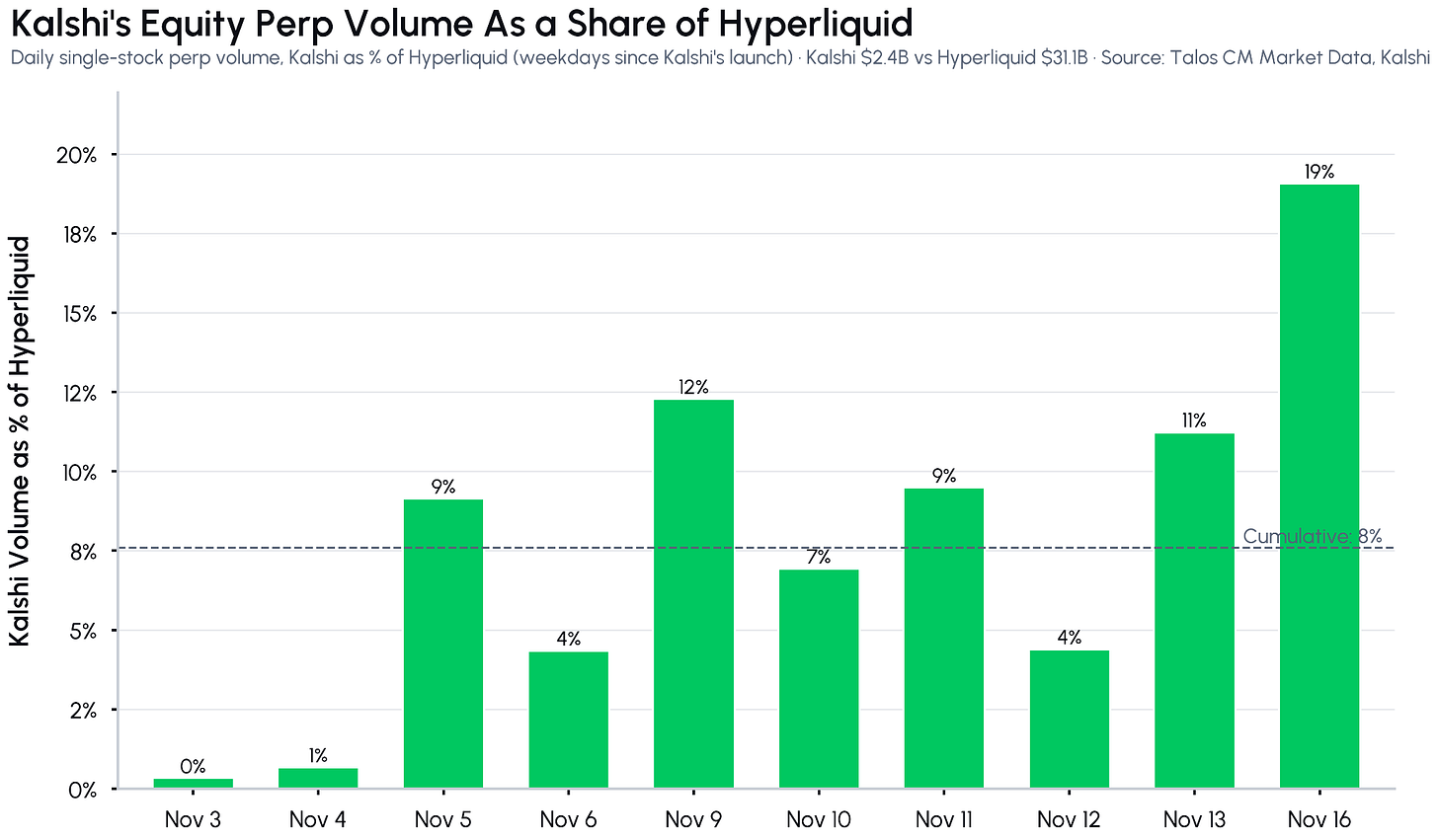
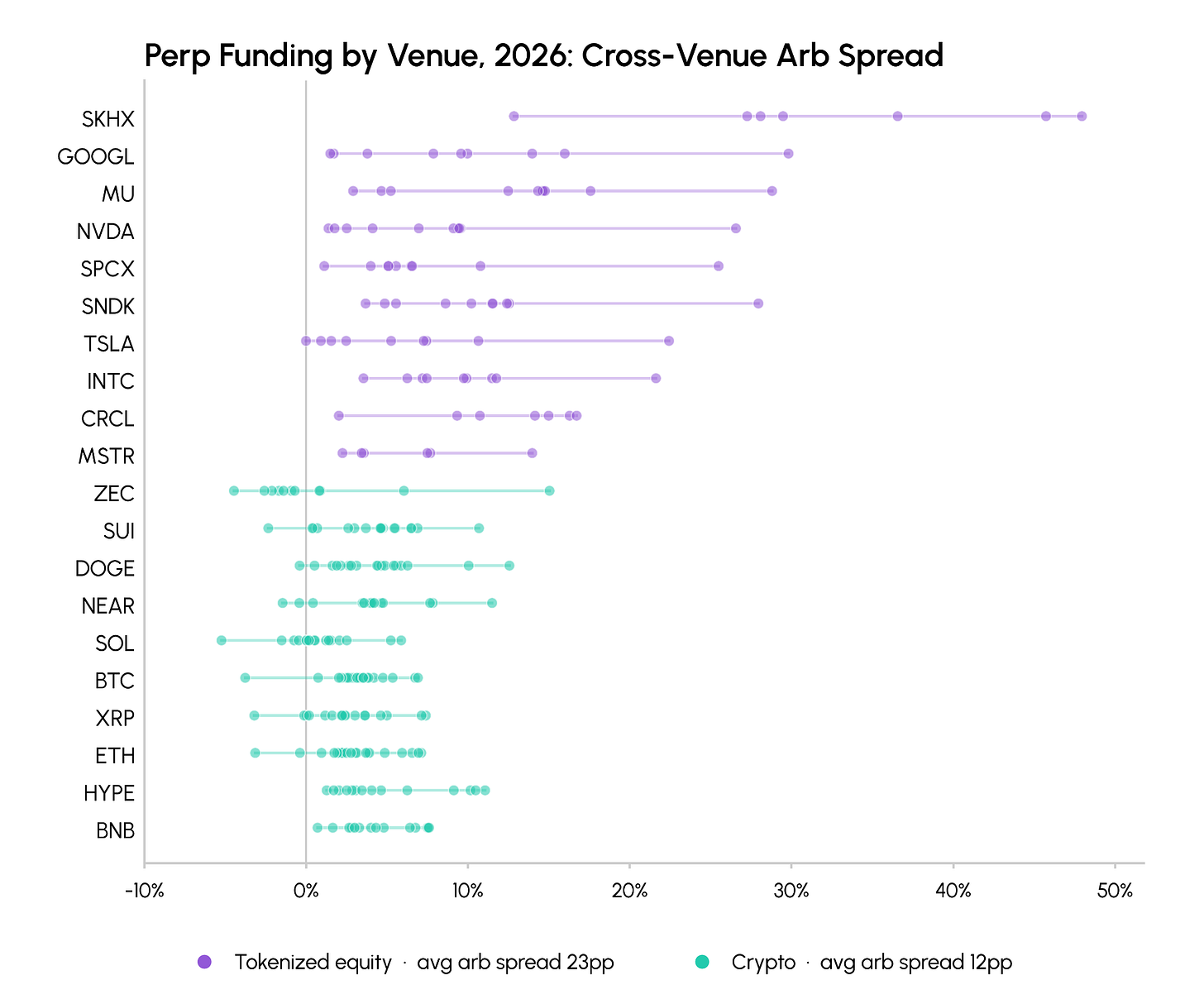
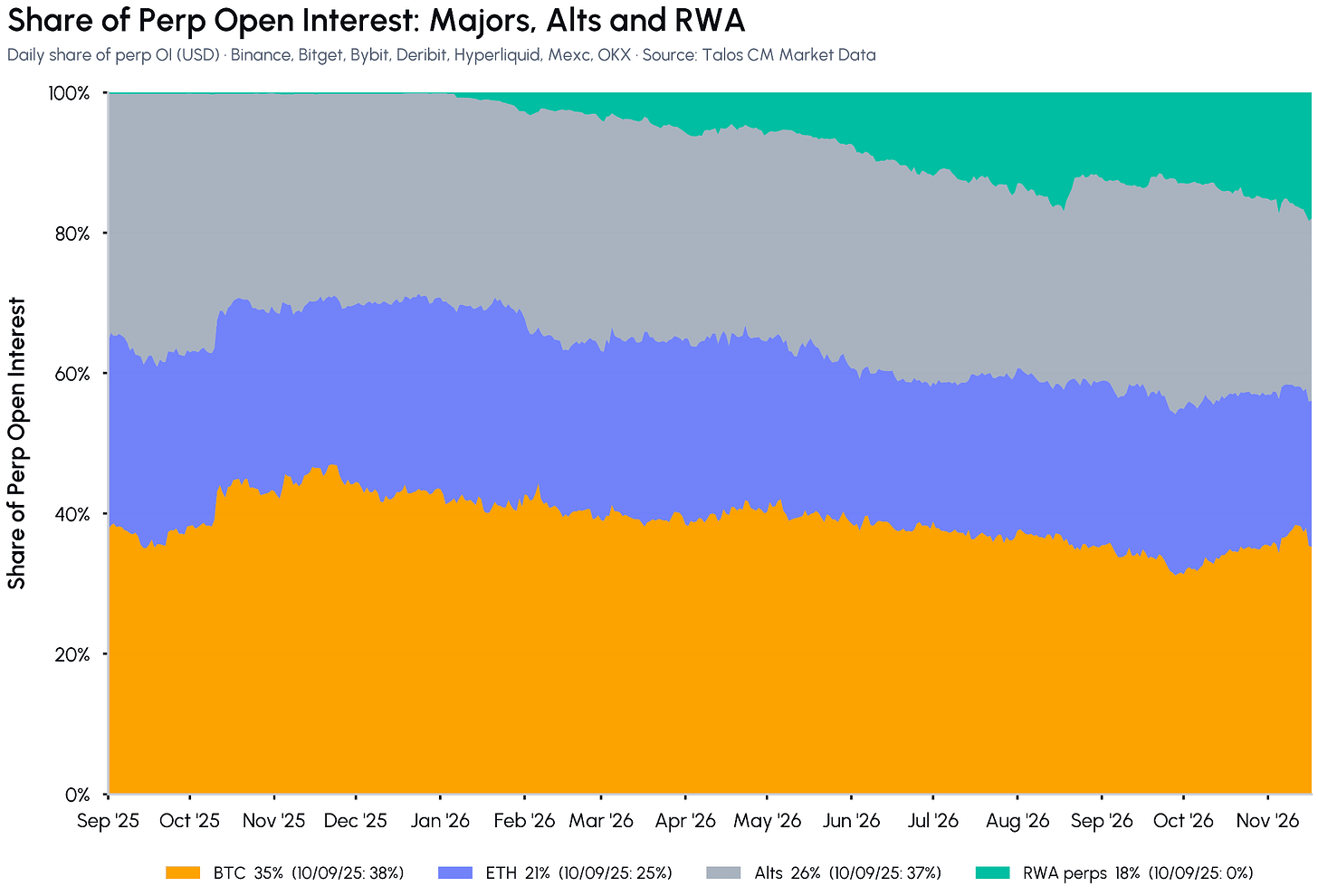
According to the report, open interest in real-world-asset perpetuals exceeded $11 billion and represented 18% of open interest across the major derivatives platforms it surveyed. It assigns Binance a 39% share and Hyperliquid 38%. The report describes stablecoins as margin for trading these contracts; a stock-linked perpetual is a derivative, not ownership of the referenced shares.
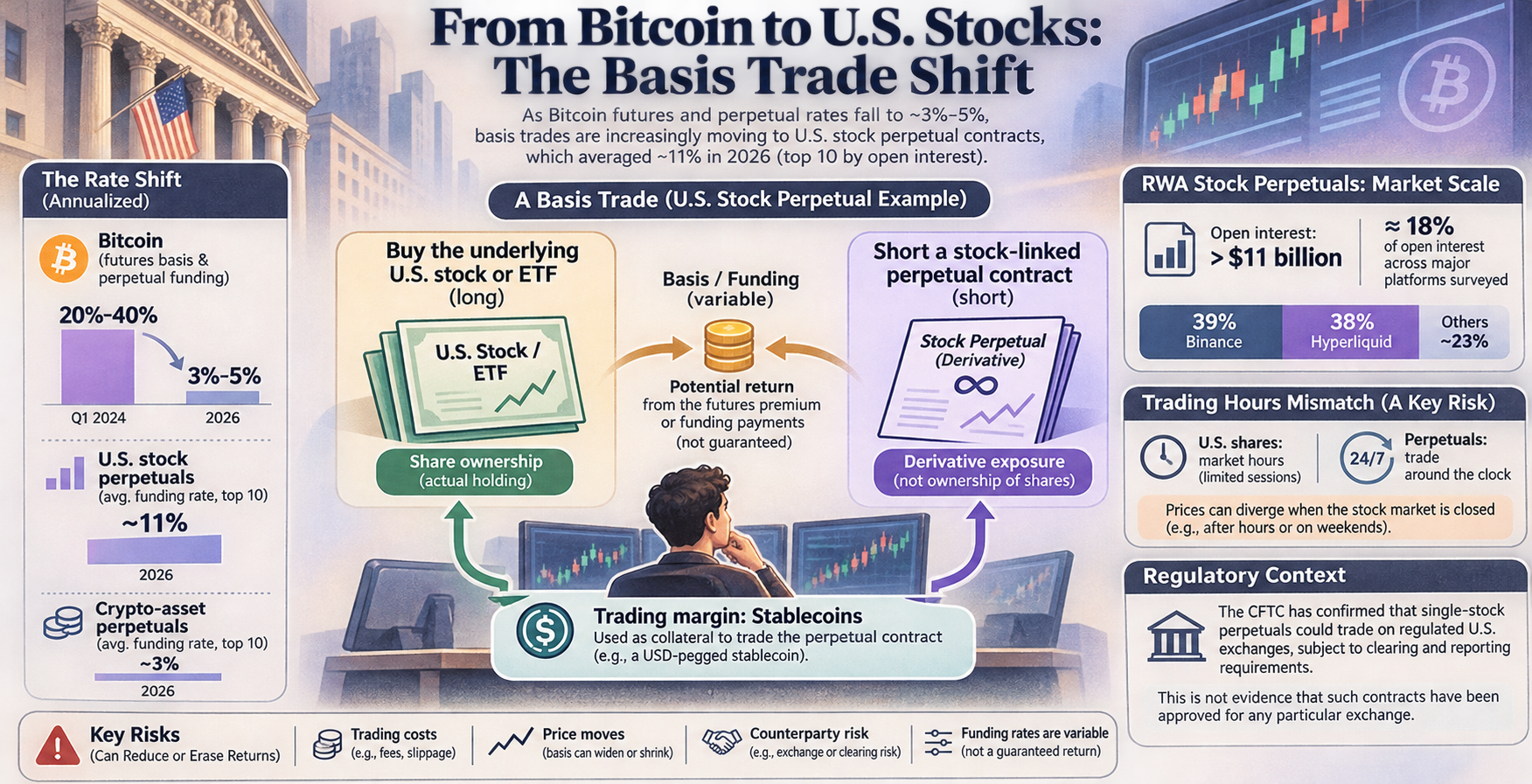

The report also says the CFTC had confirmed that single-stock perpetuals could trade on regulated U.S. exchanges subject to clearing and reporting requirements. It provides no dated CFTC decision or specific rule in the supplied account, so that regulatory claim should not be treated as evidence that such contracts had been approved for any particular exchange. The report notes a separate trading risk: U.S. shares have market hours, while the perpetual contracts trade around the clock, allowing prices to diverge when the stock market is closed.