
Bitcoin rose 5% to $64,603 on November 23, 2026, but gave back the gain within six hours. It went on to lose support near $61,000 and, by November 25, had traded below $60,000 for the second time in a week. CoinMarketCap data showed bitcoin down 8.5% over the week and 26.1% over the month. Its September rally above $80,000 had raised hopes that the market had reached a cyclical low.
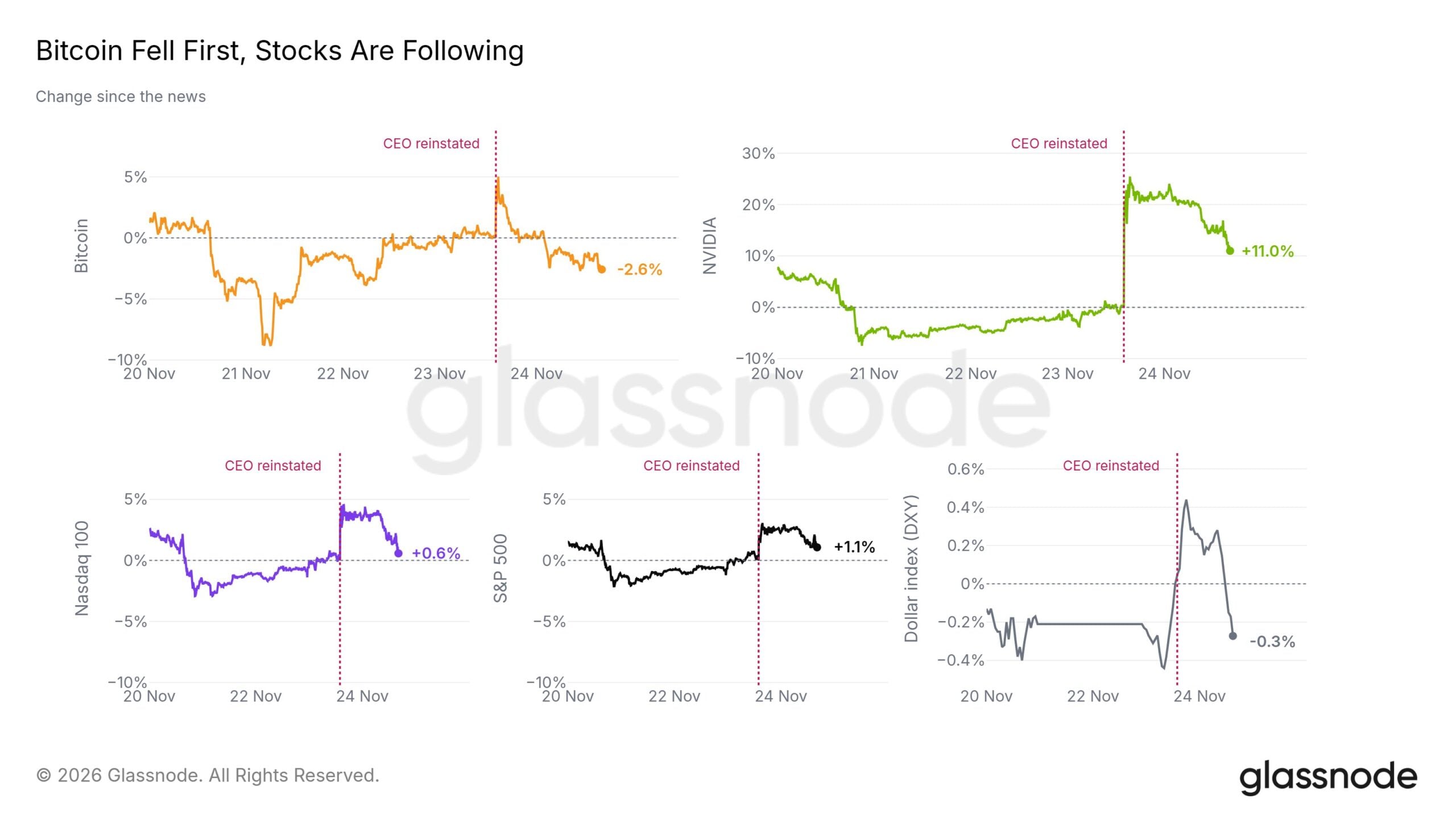
Glassnode said stocks had risen on reports that Nvidia had reinstated Jensen Huang as CEO. The Nasdaq later gave back its gains as well. Glassnode interpreted bitcoin’s earlier reversal as a sign that investors were using the rebound to sell.
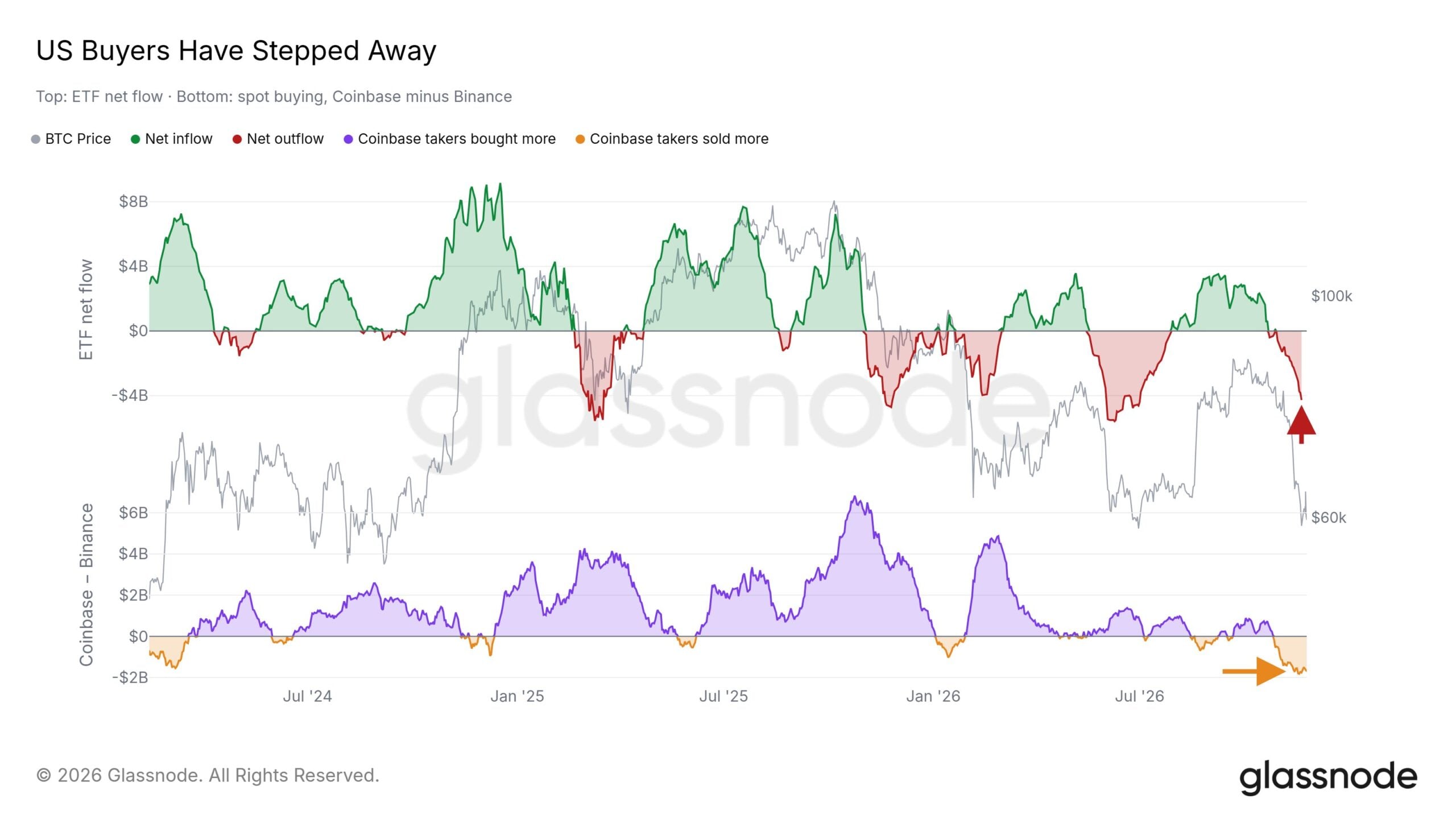
U.S. spot bitcoin exchange-traded funds recorded $4.3 billion in outflows over the preceding 20 trading days. Glassnode also noted heavy selling pressure on Coinbase.
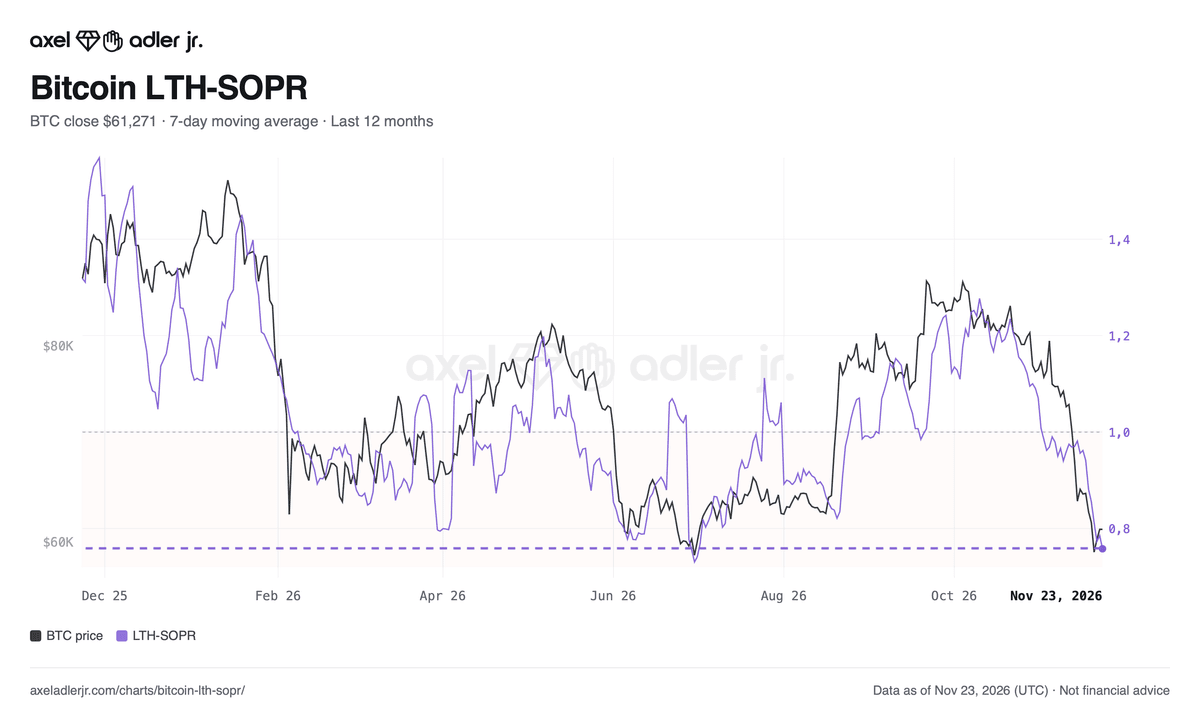
Long-term holders moved coins at deeper losses
The spent output profit ratio (SOPR) compares the value of coins when they move with their value when they last moved. A reading below 1 means the coins that changed hands did so at a loss on average; it does not measure the profitability of coins that stayed put.
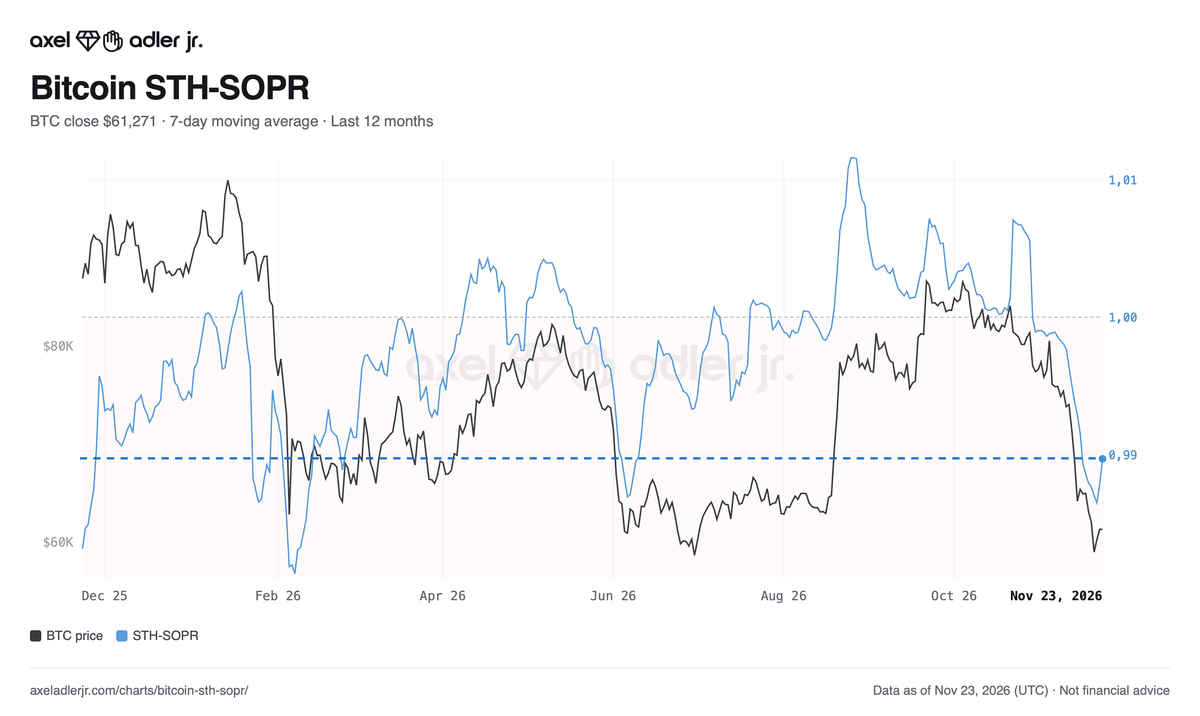
The ratio stood at 0.99 for short-term holders, just below break-even. Analyst Axel Adler Jr. noted that the long-term holder ratio had fallen 0.20 over the week to 0.76, a 90-day low. Long-term holders had moved coins at a loss on average for 22 consecutive days.
Alphractal put bitcoin’s onchain realized price at $53,104. That figure was a benchmark, not a forecast: a market decline to around $53,000 or lower was a downside scenario if demand remained weak.